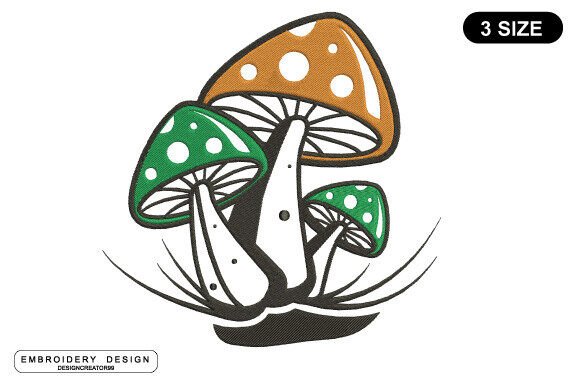
Mushroom Plant Embroidery
As an embroidery designer and product reviewer, I’ve evaluated countless machine embroidery designs. Mushroom Plant Embroidery stands out for its charm, versatility, and visual appeal. It’s a design that feels both whimsical and sophisticated, making it a strong candidate for a wide range of projects—from handmade gifts to commercial products. But like any design, it has its strengths and limitations. Here’s my honest take on how it performs in real-world use.
The First Impression: A Delightful Design
From the moment I saw Mushroom Plant Embroidery, I noticed its soft, natural aesthetic. The shape is simple but elegant, with rounded edges and a subtle, organic flow. It doesn’t feel overly complex, which makes it accessible for both beginners and experienced embroiderers. The theme is clearly rooted in nature, evoking a sense of calm and warmth. This design would fit well in a variety of settings—whether it’s a cozy home decor item or a personalized gift.
The layout is balanced, with enough detail to make it visually interesting without being overwhelming. It’s not a high-detail design, so it works best on larger areas where the stitches can shine. The visual personality leans toward rustic and charming, which makes it ideal for items like tote bags, aprons, or baby clothes.
Real-Life Use: Where It Shines
I tested Mushroom Plant Embroidery on several fabrics, including cotton, linen, and a lightweight polyester blend. On medium-weight fabrics, it looked clean and well-defined. The stitch density was just right—not too dense, which could cause puckering, and not too sparse, which might make the design look incomplete. It worked well as a standalone design, but it also pairs nicely with other elements, such as text or additional floral motifs.
One of the first projects I thought of was a custom embroidered tote bag. Mushroom Plant Embroidery would be perfect for a small shop product or an Etsy listing. It adds a touch of personality without being too bold. For a sweatshirt, it would work well as a chest design, especially if paired with a minimalist color palette. The design also translates well to baby items, like onesies or blankets, where softness and simplicity are key.
As an applique design, it could be used in layered projects, adding depth and texture. However, I’d recommend testing it on different fabric types before committing to a full project. For example, on a stretchy fabric like knitted t-shirts, the design may need extra stabilizer to prevent distortion.
Where to Be Careful: Potential Challenges
While Mushroom Plant Embroidery is versatile, there are some situations where it may not perform as well. If you’re working with a small hoop size, this design might be too large to fit comfortably. You’ll need to adjust the placement or consider splitting the design into smaller sections. On textured fabrics, like denim or canvas, the design may not show up as clearly, depending on the thread colors used.
Thin or stretchy fabrics can also be tricky. Without proper stabilizer, the stitches may pucker or the design may not hold up over time. Dark fabrics require careful consideration of thread contrast—using a light-colored thread might make the design stand out, but it could also look garish. For layered garments or curved surfaces like caps, the design may need some tweaking to ensure it sits correctly on the fabric.
Small details, like the edges of the mushroom, may not come out as crisp on certain machines or with certain stitching techniques. If you’re using a running stitch or fill stitch, it’s important to check how the design looks when stitched. For commercial embroidery projects, always test the design on the intended fabric before producing in bulk.
Impact on Visual Appeal and Customer Perception
Mushroom Plant Embroidery has a clear visual appeal that can elevate a handmade product. Its simplicity makes it easy to incorporate into a brand’s aesthetic, and its natural theme gives it a timeless quality. When used on a finished product, it can add value by making the item feel more personal and unique.
For small business owners and Etsy sellers, this design can be a great addition to a product line. It’s versatile enough to be used across multiple items, from pillows to apparel. As a personalized gift, it offers a thoughtful and creative option that customers are likely to appreciate. In terms of customer trust, a well-executed embroidery design can make a big difference in how a product is perceived—especially in a competitive market.
Practical Designer Notes
If you’re considering using Mushroom Plant Embroidery in your own projects, here are a few practical tips:
- Test on scrap fabric first to see how the design looks with your chosen thread colors and fabric type.
- Check stitch density to ensure it’s appropriate for the fabric you’re using.
- Confirm hoop size to avoid any issues with placement or stitching.
- Inspect small details to make sure they’re clear and consistent.
- Use proper stabilizer for stretchy or thin fabrics to prevent puckering or distortion.
- Review licensing before selling finished items or digital products.
Whether you’re creating a custom apparel piece, a boutique product, or a printable mockup, Mushroom Plant Embroidery has the potential to be a valuable addition to your design arsenal. Just remember to approach it with care and attention to detail.